
The Four Fundamentals
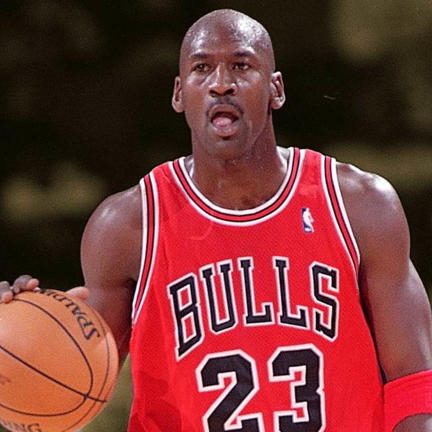
“You can practice shooting eight hours a day, but if your technique is wrong, then all you will become is very good at shooting the wrong way. Get the fundamentals down and the level of everything you do will rise …”
— Michael Jordon, NBA Basketball Champion
The Journey Begins
Now that you have embarked on this badminton journey, I think there are four fundamentals of training in order to become better. They are all equally important but strengths in one can help compensate for weakness is others. Of course, being strong in all of them is the best case but not all of us have the same coordination, strength, mental or physical abilities.
What do I think are the four fundamentals ?
Physical
Yup, badminton is a physical sport so the more physical fit (strength, flexibility, agility, stamina) you are the better you will be. I will even put in here age, even though people say age is a number, it matters.
There are tons of exercises you can do to train your body and core, but better to find the exercises that are more suited to badminton. In badminton you need speed, explosive power, endurance, flexibility just to name a few. The main idea is to train exercises or drills that enhance these traits.
Technical
This is all about what most people search the web for, how to properly execute a particular shot or technique. Like how to hold the racquet, how to Clear, proper footwork or for most beginners how to smash ;-). (I was a beginner too …)

I think in order to learn a technique you must go through a process;
- Theory – Find examples, of the technique you are trying to learn. Then try to understand the what, the why and the how of the technique. You have to ask yourself Why is it done this way ? What are the advantages, disadvantages ? Does it make sense ? Having an understanding of the how and why is it done this way will make it easier for you to learn the technique as you will have a goal of what you are trying to achieve.
- Practice – Yes practice, and I don’t mean playing games and trying to execute a “new” technique. You have to do practice, drills outside of games. You will progress much faster and develop less bad habits. Just think how many chances in game you will have to try a particular shot vs having a friend or someone feed you 20 shuttles ? How many hours do professional athelets train off the court vs actually in game ?
- In Game – Of course, executing a technique in static or dynamic drills is different than in game. The tempo of the game, and position of the shuttle and your mind are in a different state. So you have to force yourself to try that shot or new technique to let your mind and body gain confidence, so you can almost execute it without thinking, almost like instinct. One, way is to tell yourself, “If I get this shuttle in this situation I will ONLY execute this new techinque” like if your practicing Drop shot, every Lift you get you will ONLY do a Drop shot for the game.
- Review – Final and the most important part, you need to review your technique. Yes, especially without having a coach, you need review your technique to determine; if what you think you are doing (in your mind) is what you are actually doing in practice and/or game. One of the best ways, if you don’t have a coach, is to video yourself (in slow motion) and re-watch it, to see if you actually executing the technique you learned in your Theory section.
Tactical
Once you know how to execute a particular shot, When do you play this shot ?
Badminton is like a real time chess match of physical strategy. You have to know when you make a particular shot, what are you trying to achieve ? What might be the expected reply ? How will I counter the reply ? I guess that’s why I like playing badminton.
As a beginner, you may be thinking (or maybe not even thinking) just hit the shuttle over the net and that’s OK. But, at the next level you want to have a plan where you hit the shuttle to control the rally either for yourself or to create opportunities for your partner (in doubles).
You have question, if I make this particular shot what am I expecting my opponent to do ? Do you go for the ought right winner or create a shot that makes forces your opponent to make a bad reply and then you will have an outright winner ? And all of these calculations are is done in a split second.
Don’t worry, after a while you will start to notice patterns or set plays where depending on the quality of your shot you will expect a certain reply almost like set plays, and when you become more advanced you will start to create your own.
Mental / Psychological
Not enough can be said about this and I think it’s the most difficult to train. Besides the physical and technical aspect of the game, as I said, you are in a duel of wits against your opponent.
You have to train you mind to be calm in tense situations (like when serving to an aggressive receiver) , to be not afraid that your opponent may be better that you (or you think they are better than you), to not become nervous when the scores are close (when game point is on the line).
You have to have a calm collected state and belief in yourself and your training, you will always play better when you are relaxed. You, have to forget about what your opponent can do and focus on only the things you can control.
And ?
Is there a fifth one ? If you read my first post, maybe Heart …